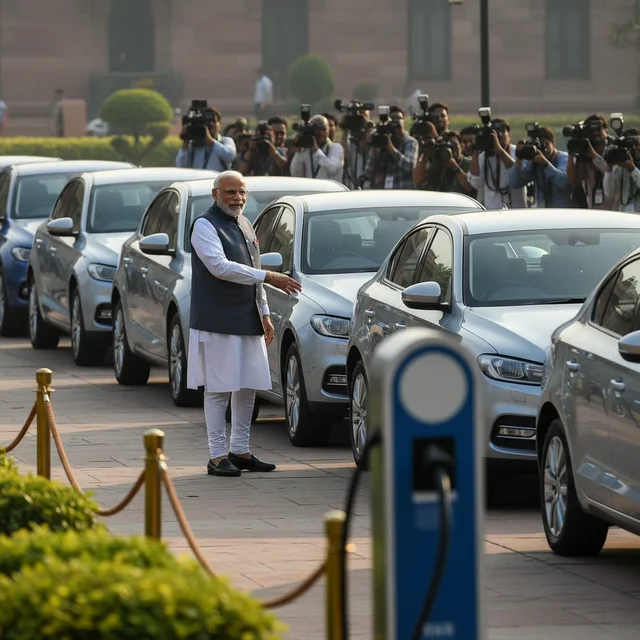
Prime Minister Narendra Modi has ordered a 50% reduction in his official convoy size while pushing for greater use of electric vehicles as part of a broader austerity and fuel-saving initiative.
What’s Changing?
Convoy Reduction:
- 50% fewer vehicles in PM’s official convoy
- Implemented during visits to Gujarat and Assam
- Security arrangements maintained under SPG protocol
- No compromise on essential protection
EV Push:
- Electric vehicles to be included in convoy
- No fresh vehicle purchases required
- Focus on existing EV fleet utilization
- Union ministers following suit
Why This Initiative?
1. West Asia Crisis Impact
The ongoing conflict in West Asia has disrupted global oil supplies, leading to:
- Rising fuel prices
- Foreign exchange pressure
- Supply chain uncertainties
2. Fuel Conservation Appeal
During his Hyderabad speech, PM Modi urged citizens to:
- Reduce petrol and diesel usage
- Use metro services more frequently
- Adopt carpooling
- Increase EV adoption
- Use railways for parcel transportation
- Practice work-from-home where feasible
3. Environmental Benefits
Electric vehicles offer significant advantages:
- Zero tailpipe emissions
- Reduced air pollution in cities
- Lower operating costs
- Reduced oil import dependency
Government Ministers Following Suit
Several Union ministers are adopting similar measures:
| Minister | EV Initiative |
|---|---|
| Amit Shah (Home) | Increasing EV use in official movements |
| Other senior leaders | Similar reduction in convoy size |
Impact Analysis
Fuel Savings Potential:
| Vehicle Type | Monthly Fuel Cost | EV Replacement Savings |
|---|---|---|
| Official Car | Rs 50,000-80,000 | Rs 5,000-15,000 |
| Convoy (10 vehicles) | Rs 5-8 lakh/month | Rs 50,000-1.5 lakh/month |
Environmental Impact:
- Reduced carbon emissions
- Lower air pollution in capital cities
- Sends strong signal about EV adoption
India’s EV Push
This initiative aligns with India’s broader EV targets:
Government EV Targets:
- 2030: 30% of government fleet to be electric
- 2035: 100% EV sales for new vehicles
- 2070: Net zero emissions
Current EV Penetration:
- 2-wheelers: ~5% of sales
- 4-wheelers: ~2% of sales
- Commercial vehicles: Growing rapidly
What It Means for EV Industry
Short-term Benefits:
- ✅ Government endorsement boosts EV image
- ✅ Increased visibility of EVs
- ✅ Reduced range anxiety as government uses EVs
- ✅ Strong signal to bureaucracy
Long-term Impact:
- Policy shifts toward EV infrastructure
- Government buildings getting charging stations
- Civil servant EV adoption encouraged
- Procurement policies favoring EVs
How Citizens Can Follow
Individual Actions:
- Consider EVs for next vehicle purchase
- Use public transport — Metro, buses
- Carpool — Share rides with colleagues
- Work from home — When possible
- Plan routes — Combine errands efficiently
For Businesses:
- Fleet electrification planning
- Employee EV incentives
- Charging infrastructure at workplaces
Key Takeaways
- PM Modi’s convoy reduced by 50%
- Electric vehicles pushed for government use
- Part of broader fuel conservation initiative
- Union ministers following suit
- Aims to reduce foreign exchange outflow
- Environmental and economic benefits expected
This initiative sets an example for citizens and corporations to reduce fuel consumption and embrace electric mobility.